Source automotive industry plastic snap rivet for fasteners, clips, and assemblies
Compare 30 verified listings for automotive industry plastic snap rivet from Chinese manufacturers. Buyers can evaluate specifications, certifications, and pricing for fasteners, clips, and assemblies.
Key considerations
Products List




Comprehensive Sourcing Guide
Strategic Sourcing Guide for Automotive Industry Plastic Snap Rivets
Understanding Technical Specifications and Material Properties
When sourcing plastic snap rivets for the automotive sector, the primary objective is to identify components that meet rigorous mechanical and environmental demands. The product landscape for these fasteners is diverse, with specific models such as the R series, PDM-11, SF104, GZ216, R3580, and R5065 appearing in current market listings. These identifiers often correlate with specific dimensional profiles or functional applications within vehicle assembly lines. Buyers must recognize that the "R series" designation frequently appears as both a product model and a standard reference, indicating a need to verify if the standard implies a specific dimensional tolerance or a generic industry classification.
Material composition is a critical differentiator. The observed data indicates that these components are predominantly manufactured using plastic injection molding, a process that ensures high consistency and repeatability essential for mass automotive production. The material properties often include a fireproofing level of 94-V2, a standard rating for flammability that is crucial for interior and under-hood applications where heat and spark resistance are mandatory. Furthermore, the operating temperature range for these fasteners is typically cited between -30°C and +80°C, with some variants offering heat resistance up to 120°C. This thermal stability ensures that the snap rivets maintain their clamping force and structural integrity across the extreme temperature fluctuations experienced in automotive environments, from freezing winters to hot engine bays.
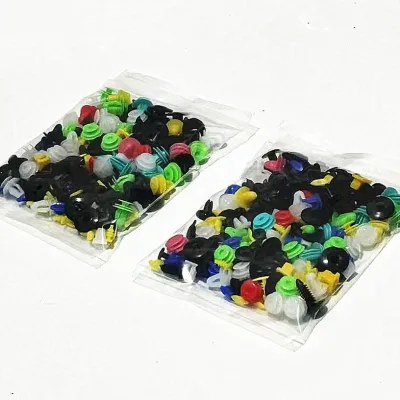
Color options are another specification variable, with black being a common standard, while other listings mention black and natural finishes. This variation allows procurement teams to match the aesthetic requirements of the vehicle's interior or to distinguish between different assembly stages. The unit of measurement for these components is consistently listed in millimeters (mm), which is the global standard for automotive engineering. When evaluating a specific supplier's catalog, buyers should cross-reference the model number against the required dimensional tolerance, as the standard size may vary from customized sizes depending on the specific application needs.
Compliance, Certification, and Regulatory Standards
In the automotive industry, compliance is not merely a preference but a prerequisite for market entry. The supply chain for plastic snap rivets is heavily regulated, requiring suppliers to demonstrate adherence to international quality and environmental standards. High-confidence data from current product listings confirms that certifications such as ISO, RoHS, and CE are prevalent. More specifically, the automotive sector often demands the IATF 16949 certification, which is the global standard for quality management systems in the automotive industry. Several product entries explicitly list IATF 16949 alongside ISO 9001 and RoHS, indicating a robust quality framework that covers everything from design control to production process monitoring.
The RoHS (Restriction of Hazardous Substances) directive is another critical compliance factor. This standard restricts the use of specific hazardous materials in electrical and electronic equipment, which extends to the plastic components used in modern vehicles. The presence of RoHS certification in product attributes assures buyers that the raw materials used in the injection molding process do not contain prohibited levels of lead, mercury, cadmium, or other restricted substances. Additionally, the UL 94-V2 fire rating mentioned in the specifications serves as a verification of the material's flammability performance, a requirement often mandated by safety regulations for interior trim and under-dash components.
Buyers must verify that the supplier's certification is current and covers the specific manufacturing location. While many listings indicate "China" as the origin, with specific mentions of Ganzhou, the certification validity must be confirmed for the specific production facility. The standard "ISO" mentioned in general listings often refers to the broader ISO 9001 family, but for automotive applications, the specific IATF 16949 standard is the gold standard. It is essential to request valid certificates from the supplier that explicitly state the scope of certification includes the manufacturing of plastic fasteners. Relying on general "ISO" claims without the specific IATF designation can lead to non-compliance issues during customer audits.
Cost Drivers and Economic Factors in Procurement
The pricing structure for automotive plastic snap rivets is influenced by a complex interplay of factors, including material costs, order volume, and customization requirements. The observed price range in the market spans from $0.01 to $2.50 USD per unit. This wide variance is not indicative of quality differences alone but is heavily driven by the scale of the purchase and the complexity of the part. The Minimum Order Quantity (MOQ) is a significant economic driver, with observed ranges extending from as low as 1 unit to as high as 30,000 units. For large-scale automotive OEMs, the ability to negotiate prices at the higher end of the MOQ spectrum is critical for maintaining competitive cost structures.
Customization is a primary cost variable. While some products are listed as "Non-Customized" with standard sizes, others offer "Customized" options or "as request" specifications. Customizing the dimensions, color, or material formulation of a snap rivet inevitably increases the unit cost due to the setup of new molds and the adjustment of production lines. The data shows that some suppliers offer "Standard Package" solutions, while others provide bespoke packaging like "1000 sets/Bag" or "Nylon Bag" configurations. These packaging variations can impact the final landed cost, especially when considering logistics and handling efficiency in an automated assembly line.
The unit price also correlates with the performance attributes of the rivet. Components with enhanced features, such as strong anti-wind capability or specific waterproof ratings, may command a higher price point. The "Eco-Friendly" performance attribute noted in some listings suggests that sustainable material sourcing could be a cost factor, potentially adding a premium for biodegradable or recycled plastic formulations. Buyers should analyze the total cost of ownership, which includes not just the unit price but also the cost of quality assurance, potential rework due to non-compliance, and the efficiency of the installation process. A slightly higher unit price for a rivet that installs faster or requires no secondary fastening can result in significant savings in labor costs.
Typical Applications and Functional Requirements
Plastic snap rivets serve a multitude of functions within the automotive ecosystem, ranging from interior trim retention to under-hood component securing. The specific model numbers observed, such as the GZ216 and SF104, often correspond to distinct application areas. For instance, the "Blind Rivet" type is frequently utilized in scenarios where access is limited to one side of the assembly, a common constraint in vehicle door panels and dashboard assemblies. The "Plastic Push Fastener" category is typically used for securing lightweight trim pieces, such as grille inserts, bumper covers, and interior door cards.
The functional requirements for these applications are stringent. The "Waterproof" attribute is essential for exterior applications where the rivets must prevent moisture ingress that could lead to corrosion of metal components or electrical failures. Similarly, the "Anti-wind Capability" is a critical performance metric for exterior panels, ensuring that the fasteners do not fail under high-speed aerodynamic loads. The "LED Billboard" type mentioned in the data suggests applications in vehicle lighting assemblies, where the rivets must withstand vibration and heat generated by the lighting elements.
The operating temperature range of -30°C to +80°C (or up to 120°C for heat-resistant variants) dictates the suitability of the rivet for different zones within the vehicle. Interior components, which are generally shielded from direct engine heat, may utilize standard temperature-rated rivets, while under-hood components require the higher heat resistance variants. The "Fireproofing Level 94-V2" is particularly relevant for interior applications where fire safety is a regulatory requirement. Buyers must map the specific functional requirements of their assembly to the technical specifications of the rivet to ensure long-term reliability.
Supplier Evaluation and Quality Assurance Protocols
Selecting the right supplier for automotive plastic snap rivets requires a rigorous evaluation process that goes beyond price comparisons. The presence of certifications like IATF 16949, ISO 9001, and RoHS is a baseline requirement, but buyers must also assess the supplier's manufacturing capabilities and quality control systems. The "Plastic Injection" molding type is the standard production method, and the supplier's ability to maintain tight tolerances during this process is paramount. Variations in the molding process can lead to dimensional inconsistencies, which can cause assembly failures or gaps in the final vehicle body.
Quality control protocols should include regular testing for the specified fireproofing levels and operating temperatures. Buyers should request test reports that verify the UL 94-V2 rating and the thermal stability of the material. The "Warranty Time" of one year mentioned in some listings provides a baseline expectation for product reliability, but automotive buyers often require longer warranty periods or specific performance guarantees. The "Standard Package" and "Nylon Bag" packaging options should be evaluated for their ability to protect the components during shipping and storage, preventing damage that could compromise the snap rivet's mechanical properties.
Supplier location, such as Ganzhou, China, is a factor in logistics and lead time management. While the origin is a known fact, the actual lead times and the ability to meet Just-In-Time (JIT) delivery schedules are critical for automotive production lines. Buyers should verify the supplier's capacity to scale production, given the observed MOQ range up to 30,000 units. A supplier that can handle large volume orders without compromising quality or delivery timelines is essential for maintaining production continuity. Additionally, the "Customized" attribute indicates that the supplier should have the flexibility to adapt to specific design changes, which is common in the iterative development process of automotive components.
Long-Term Procurement Considerations and Risk Management
Sourcing plastic snap rivets for the automotive industry involves long-term strategic planning to mitigate risks associated with supply chain disruptions and regulatory changes. The "Eco-Friendly" performance attribute highlights a growing trend towards sustainability, which may influence future procurement decisions. As environmental regulations tighten, buyers should anticipate a shift towards suppliers who can provide materials with lower carbon footprints or higher recycled content. This proactive approach ensures compliance with future standards and enhances the brand's sustainability profile.
The variability in product models and standards, such as the distinction between "R series" and "standard size," necessitates a robust inventory management strategy. Buyers should establish clear specifications for each application to avoid confusion between similar-looking but functionally different rivets. The "Unit" of measurement in millimeters is standard, but the specific dimensions for each model must be documented and verified against the vehicle's design requirements.
Risk management also involves diversifying the supplier base. Relying on a single source for critical components like snap rivets can expose the supply chain to significant risks. Given the observed range of suppliers and the variety of certifications available, buyers should consider maintaining relationships with multiple vendors who can meet the required quality and compliance standards. This strategy ensures continuity of supply in the event of production issues at a primary supplier. Finally, the "Warranty Time" and "Performance" claims should be regularly reviewed and updated as part of the supplier performance evaluation process to ensure that the long-term value proposition remains consistent with the automotive industry's high standards.
FAQs
What certifications do automotive plastic snap rivets typically have?
High-confidence data shows these rivets commonly hold ISO, RoHS, CE, and IATF 16949 certifications. Suppliers often list these standards to prove compliance with automotive quality management and environmental restrictions on hazardous substances.
How are these rivets packaged for shipping and storage?
Packaging varies from standard cartons and pallets to specific configurations like 1000 sets per nylon bag. Some listings also mention plastic bags combined with cartons and pallets to ensure protection during transit.
What is the operating temperature range for these fasteners?
The typical operating temperature range spans from -30 degrees to +80 degrees Celsius. Certain heat-resistant variants can withstand temperatures up to 120 degrees, ensuring stability in under-hood applications.
Which fireproofing levels are available for interior applications?
Most listed products meet the UL 94-V2 fireproofing level, which is standard for interior automotive components. This rating ensures the plastic material resists ignition and limits flame spread during safety testing.
Can buyers request customized sizes for specific assembly needs?
Yes, many suppliers offer customized sizes or standard sizes based on specific requests. While some items are non-customized, others explicitly state that customization is available to fit unique dimensional profiles.
What is the minimum order quantity for these plastic rivets?
The minimum order quantity ranges from 1 unit up to 30,000 units depending on the supplier. Specific listings may require 1000 pieces as a baseline, while others allow smaller trial orders.
Where are these automotive fasteners primarily manufactured?
The products originate from China, with specific manufacturing locations identified as Ganzhou. This regional concentration helps streamline logistics for buyers sourcing components from established industrial hubs.